Bank Solutions report · September 2026
Cash is where the money goes: what UK business accounts charge to pay in notes and coins
Twenty-five of the 31 UK business account plans in the Bank Solutions dataset publish what they charge to pay in cash; on those plans, £1,000 a month in four deposits costs between £0 and £21 a month, median £10, and 12 of the 25 accept cash only through the Post Office.
Key findings
- 25 of the 31 plans (from 13 of the 16 providers) publish cash-deposit terms; the 6 that do not - Allica Bank's Business Rewards Account, ANNA Money's four plans and Wise Business - mention no cash service at all on the pages read.
- Paying in £1,000 a month in four deposits costs between £0 and £21 a month across the 25 plans, with a median of £10 and a mean of £10.56; the three £0 results come from a published £1,000 monthly allowance and the £21 from HSBC's 1.50% of value plus £1.50 per credit.
- Classifying each of the 25 plans by which of the four recorded charge types is present in its tariff, 10 charge per £100 deposited, 7 charge a percentage of the value, 15 charge a fee per deposit and 4 apply a minimum per deposit; 7 plans combine a value-based charge with a per-deposit charge, so the four counts sum to more than 25.
- 12 of the 25 plans, from five providers (Starling Bank, Monzo Business, Tide, Zempler Bank and Mettle), take cash only over a Post Office counter (Monzo and Tide also name PayPoint); the Post Office says it charges no deposit fee itself and that 'your bank decides which services you can use there, along with any limits or charges'.
- Three plans publish a standing free allowance, each of £1,000 a month: Santander's Business Current Account Classic (at Santander cash machines only) and the Co-operative Bank's Business Directplus and FSB accounts; none of the 12 Post Office-only plans publishes one.
A shop, a café, a market stall or a playgroup ends most days with notes and coins that have to reach a bank account. On a business account tariff that is the one line where providers agree on almost nothing: not the unit they charge by, not the place you can pay in, not whether there is a free amount first. This report takes the 31 plans in the Bank Solutions dataset (16 providers, every figure read from the provider’s own tariff or pricing page on 5 September 2026), isolates the 25 that publish cash-deposit terms, and puts one question to each: what does it cost to pay in £1,000 a month as four deposits? It then reads what the Post Office - the only counter for 12 of those 25 plans - says about who sets the fee.
1. Why cash is the least comparable line on a tariff
A monthly fee is a number; a payment fee is a number per item. A cash charge can be either, both, or a percentage, and the dataset records four kinds of figure for it: a charge per £100 paid in, a percentage of the value, a charge per deposit, and a minimum charge per deposit.
Per £100 paid in. Barclays: “Cash in - cash machine/Post Office/Barclays Collect/self-service devices: 60p per £100”. The Co-operative Bank’s Business Bank Account: “Cash paid in or out: £1.50 per £100”. Lloyds charges “£1.60 for every £100”, NatWest “£0.95 per £100”, Santander “£1.25 for every £100”, and Virgin Money £0.65 (Business Current Account) or £0.90 (M Account) per £100. Ten of the 25 plans price this way.
A percentage of the value. HSBC: “Cash in … 1.50% of the value deposited. Post Office cash in: 1.50% of the value deposited”. Metro Bank: “Cash deposited, withdrawn, or exchanged in Store (excludes ATM withdrawals): 1.00%”. Starling charges “a 0.7% fee” and Zempler Bank a “0.55% fee … on the total amount deposited”. Seven plans. Arithmetically a charge per £100 is a percentage, but the tariffs present the two differently and the dataset keeps them apart; how a part-£100 is treated is not stated in the documents read.
A fee per deposit. Monzo Business: “Cash deposit: £1 per deposit to pay in cash at any PayPoint or Post Office”. Mettle: “Cash deposit (made through the Post Office): £2.75 per deposit”. Tide: “Post Office: £2.50 for deposits up to £500 on all plans”. The same kind of charge also sits on top of a value-based one: HSBC’s “£1.50 per credit”, NatWest’s “Manual payments (in or out): £0.95 per item”, Lloyds’ “Credit paid in - branch counter, ATM or depositpoint: £0.85” and Virgin Money’s “Manual Credit … £0.70 per credit” (£0.95 on the M Account). Fifteen plans carry a per-deposit figure.
A minimum per deposit. Starling: “0.7% fee (minimum £3 fee)”. Zempler Bank: “£4 minimum fee or 0.55% fee will apply to the total amount deposited”. Four plans.
Counting rule: a plan is classed under a model if the corresponding dataset field (per_100_gbp, pct, per_deposit_gbp, min_gbp) is not null. Seven plans - both HSBC accounts, Lloyds, both NatWest accounts and both Virgin Money accounts - combine a value-based charge with a per-deposit charge, so the four counts (10, 7, 15, 4) add to more than 25. Put exclusively: 5 plans charge per £100 only, 5 per £100 plus a per-deposit fee, 1 a percentage only, 2 a percentage plus a per-deposit fee, 4 a percentage with a minimum, and 8 a flat fee per deposit only.
No single figure describes a cash tariff: a per-£100 charge is indifferent to how often you pay in, a per-deposit charge to how much. That is why this report fixes the usage before it compares anything.
2. The routes: branch, cash machine, Post Office
Of the 25 plans, 12 accept cash by branch, machine or Post Office; one, Metro Bank, is recorded at its “in Store” rate; and 12 are recorded as Post Office only.
The Post Office publishes how this works from its side. “Most major UK banks offer personal and business banking services through our branches. Your bank decides which services you can use there, along with any limits or charges.” On fees: “At Post Office, we don’t charge deposit fees. But your bank may charge for cash deposits.” On limits: “Cash deposit limits are set by your bank. This might include: A daily deposit limit, A monthly allowance”. One ceiling is its own, for security: “If it has an open plan counter, you can deposit up to £4,000. If the counter has a glass screen, the limit is £20,000.” Coins are accepted, but “All coins need to be properly bagged in coin bags.”
The Post Office’s everyday banking page lists, bank by bank, what a business customer can do at the counter. For the five providers whose recorded route is Post Office only, the entry reads “Cash deposit: Yes” in every case - “with card” for Starling Bank, Monzo and Zempler Bank, “with card and PIN” for Tide, “with a barcoded slip provided by Mettle” for Mettle - and “Cheque deposit: No” for Starling, Monzo, Tide and Mettle; Monzo’s entry also shows “Cash withdrawal: No” and “Balance enquiry: No”. Two of the five also name PayPoint: Monzo’s £1 applies “at any PayPoint or Post Office”, and Tide prices PayPoint separately at “3% per deposit, with a £10 minimum deposit and a maximum deposit limit of £500 per day”, which the dataset does not model.
Metro Bank is the one plan recorded as branch only: it prices cash “in Store” at 1.00% and says “Post Office services are subject to request and approval. Post Office cash processing charges may vary.” The Post Office lists Metro Bank cash deposits as available “with card or with a barcoded slip provided by Metro Bank”, but without a published Metro price for that route the dataset cannot cost it.
Among the 12 “any route” plans, the route often changes the price within one tariff. Barclays charges 60p per £100 by machine, Post Office, Barclays Collect or self-service device, and “Cash in/out - counter (assisted): £1.20 per £100”. Lloyds charges £1.60 per £100 at branch counter, ATM, depositpoint, Nightsafe or Post Office but “£0.85 for every £100” via an Immediate or Automated Deposit Machine, and its £0.85 credit charge applies at branch counter, ATM or depositpoint but not at Post Office counters. Santander’s £1,000 allowance is for “Santander cash machines” only; “£1.25 for every £100 will also be charged for cash paid in over Santander counters and at Post Office counters.” HSBC and NatWest price branch and Post Office identically; NatWest’s cash centre rate - “notes in £0.30 per £100, coin £0.60 per £100” - is the only coin-specific price in the dataset.
3. What £1,000 a month costs
The Fee Index applies each plan’s published cash rule to one profile: £1,000 of cash a month paid in as four deposits of £250. Percentage and per-£100 charges are applied to the £1,000, per-deposit charges four times, minimums per deposit where the percentage falls below them, and any standing free allowance is deducted first.
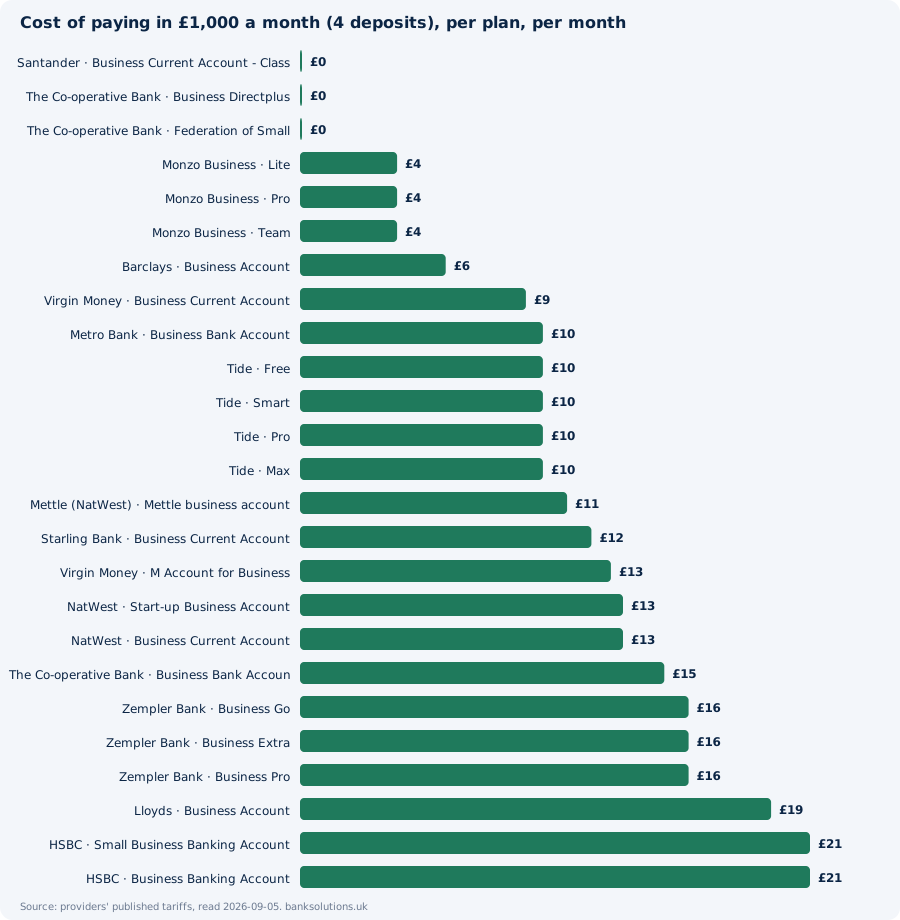
| Provider · plan | Route | Monthly cost |
|---|---|---|
| Santander · Business Current Account - Classic | any | £0 |
| The Co-operative Bank · Business Directplus | any | £0 |
| The Co-operative Bank · Federation of Small Businesses (FSB) account | any | £0 |
| Monzo Business · Lite | post office | £4 |
| Monzo Business · Pro | post office | £4 |
| Monzo Business · Team | post office | £4 |
| Barclays · Business Account | any | £6 |
| Virgin Money · Business Current Account | any | £9.30 |
| Metro Bank · Business Bank Account | branch | £10 |
| Tide · Free | post office | £10 |
| Tide · Smart | post office | £10 |
| Tide · Pro | post office | £10 |
| Tide · Max | post office | £10 |
| Mettle (NatWest) · Mettle business account | post office | £11 |
| Starling Bank · Business Current Account | post office | £12 |
| Virgin Money · M Account for Business | any | £12.80 |
| NatWest · Start-up Business Account | any | £13.30 |
| NatWest · Business Current Account | any | £13.30 |
| The Co-operative Bank · Business Bank Account | any | £15 |
| Zempler Bank · Business Go | post office | £16 |
| Zempler Bank · Business Extra | post office | £16 |
| Zempler Bank · Business Pro | post office | £16 |
| Lloyds · Business Account | any | £19.40 |
| HSBC · Small Business Banking Account | any | £21 |
| HSBC · Business Banking Account | any | £21 |
Across the 25 plans the median is £10 a month, the mean £10.56, and the range £0 to £21.
The three £0 results are not free cash handling; they are a £1,000 allowance meeting a £1,000 profile exactly. Santander: “In each monthly billing period, you can pay in up to £1,000 in cash at Santander cash machines without charge.” The Co-operative Bank’s Directplus tariff: “Cash paid in: £1,000 free per charging period and 80p per £100 thereafter”; its FSB tariff: “Up to £1,000 per charging period - Free”. Paying in £1,001 would start the meter on all three, and Santander’s £0 also depends on the route: over a Santander or Post Office counter the same £1,000 is charged from the first pound at £1.25 per £100, which is £12.50.
The highest figure, HSBC’s £21, is the sum of both its components: 1.50% of £1,000 is £15, and four credits at £1.50 add £6. Lloyds’ £19.40 is £16 in per-£100 charges plus four £0.85 credit charges (£3.40) on the branch counter, ATM or depositpoint route; at a Post Office counter, where Lloyds includes the credit at no extra cost, the same deposits would cost £16.
The profile is kind to flat fees and hard on minimums. At £250 a deposit, Monzo’s £1, Tide’s £2.50 and Mettle’s £2.75 produce £4, £10 and £11 - at or below the median - because the fee does not grow with the amount. The two percentage plans with minimums land above the median for the opposite reason: 0.7% of £250 is £1.75, so Starling’s “minimum £3 fee” applies to each of the four deposits (£12); 0.55% of £250 is £1.38, so Zempler’s “£4 minimum fee” applies four times (£16). On this profile Zempler’s 0.55% - the lowest percentage in the dataset - costs more than every plan except Lloyds and the two HSBC accounts. The ranking is a property of the profile as much as of the tariff.
Tide’s £10 assumes each £250 deposit stays under its £500 threshold (section 4).
4. Free allowances and thresholds
Three plans publish a standing free allowance, all of £1,000 a month. Santander’s applies “at Santander cash machines” and “At the start of each monthly billing period, your cash deposit limit resets, so you can’t carry any unused amount over to the next month.” The Co-operative Bank’s Business Directplus and FSB accounts each allow £1,000 “per charging period”, with charges debited “on the fifth of each month”; above it both charge 80p per £100. The FSB account is available only to FSB members. Counting rule: a plan has an allowance if free_allowance_gbp_per_month is not null; no other plan records one, and none of the 12 Post Office-only plans does.
Several tariffs mention cash in the terms of an introductory offer rather than as a standing allowance; these are not in the £1,000 calculation. Metro Bank’s 31-month switcher offer includes “free cash transactions (withdrawn, deposited or exchanged) up to £10,000 per month”, while its 12-month new-to-bank offer excludes cash; NatWest’s two-year free banking ends, for accounts opened on or after 20 April 2026, “if your cash deposits into your account exceed £200,000 in any 12-month period”.
Thresholds run the other way too. Tide’s pricing page switches model at £500: “Post Office: £2.50 for deposits up to £500 on all plans. For amounts over £500, fees are 0.99% on Free plans and 0.5% on Smart, Pro, and Max plans.” The dataset models only the flat fee, so a business making deposits above £500 would be on the percentage instead. Starling states both a minimum charge and a minimum deposit: “All deposits are subject to a £3 or 0.7% charge (whichever is higher) on the total deposit value. The minimum deposit amount in a single transaction is £3.01.” Zempler’s “£4 minimum fee or 0.55% fee” is the highest minimum in the dataset.
Deposit limits, where published, are the provider’s: Starling’s page cites £5,000 a day and £100,000 a year; Zempler a “Post Office cash deposit limit £6,000 per day”; Virgin Money’s M Account tariff £10,000 daily and £250,000 in any 12 months at the Post Office. All sit under the Post Office’s own counter ceilings of £4,000 and £20,000.
5. What is not published
Six of the 31 plans publish no cash-deposit terms: Allica Bank’s Business Rewards Account, ANNA Money’s Free, Grow, Business and Big Business plans, and the Wise Business account. Counting rule: every cash field in the dataset is null and the notes record that the page read does not mention cash - for Allica, “Cash and cheque deposits are not mentioned on the fees page”; for ANNA, “not mentioned on the pricing page”; for Wise, “No cash or cheque services are listed.”
The drop-down list of banks on the Post Office’s everyday banking page has 35 entries, from Allied Irish Bank (GB) to Zempler Bank, and Allica Bank, ANNA Money and Wise are not among them. All 13 providers in the dataset that publish a cash charge are on the list; none of the three that publish nothing is.
For an account with no branch network, no Post Office arrangement and no cash line on its tariff, “not published” is likely to mean “not offered”: there is no published way for notes and coins to reach the account. The dataset still records “not published” rather than £0 or “not possible”, because a missing line on a pricing page is not a statement that a service does not exist. The comparison page applies the same rule: “Providers whose pages do not mention cash deposits are not listed here rather than shown as ‘free’.”
Two gaps sit inside published tariffs: Metro Bank’s Post Office price “may vary” and is not stated, so only its in-Store 1.00% is costed; Mettle’s fee document states a cash price but none for UK electronic payments, so Mettle appears in the cash table but not in the Fee Index’s whole-cost personas.
6. Method and limits
The profile is an assumption. £1,000 a month in four deposits of £250 is a stated usage, chosen so that a £1,000 monthly allowance is fully used and each deposit sits under Tide’s £500 threshold; it is not an average of anything. Because per-deposit charges and minimums depend on deposit size and count, the ranking is specific to this profile; the cost calculator applies the same published rules to any amount and number of deposits, alongside the rest of a plan’s fees, and the cash deposits comparison shows each plan’s wording.
Only published figures. Every rate, minimum, allowance and limit here is quoted from the provider document or Post Office page listed in the sources, all read on 5 September 2026 (the Post Office’s business banking guide is marked “Last updated: 24/6/2026”, its business takings guide “Last updated: 15/6/2026”). No comparison site or news article was used for any fact. The monthly costs, median, mean and range are from the Bank Solutions Fee Index for September 2026, computed from the dataset fields named in section 1; the working shown for HSBC, Lloyds, NatWest, Santander, Starling and Zempler is arithmetic on those quoted figures.
What the calculation includes. Each plan is costed at its recorded route: Santander at its cash machines, Lloyds at branch counter, ATM or depositpoint, Metro Bank in Store, and the 12 Post Office-only plans at the Post Office. Tide is modelled at its flat £2.50 because every deposit in the profile is under £500; its PayPoint pricing is not modelled. Cash withdrawals, change-giving, cash exchange, coin-specific pricing, bulk cash centre rates and introductory free periods are outside the figure. VAT is as each provider publishes it: HSBC’s price list is “excluding VAT where applicable”; Santander’s fees “include any VAT unless we say otherwise”; Tide’s page does not say.
Coverage and status. The dataset is 31 plans from 16 providers, 22 bank plans and 9 e-money plans; three providers were excluded because no readable tariff could be retrieved. Tariffs change with notice; the check date on every figure is 5 September 2026, and subsequent changes are published on the tariff changes page. This is information, not advice, and makes no recommendation to any business. Current terms, routes and limits should be confirmed with the provider, and regulated or tax matters taken to a qualified adviser. Errors can be reported through the correction route on every Bank Solutions data page and are corrected in place with a dated note.
Sources
- Barclays - Business Account fees and charges (tariff PDF, version UK_0324) · accessed 2026-09-05
- HSBC UK - Business Price List (PDF, 15 December 2025) · accessed 2026-09-05
- Lloyds Bank - Account Charges and Processing Times (PDF, applies from July 2026) · accessed 2026-09-05
- NatWest - Business Current Account and Foundation Account charges (PDF, correct as at 20 April 2026) · accessed 2026-09-05
- Santander - Business Current Account Classic Key Facts Document (PDF, effective 28 April 2026) · accessed 2026-09-05
- Metro Bank - Business Bank Account Important Information Summary (PDF, correct as of 22 July 2026) · accessed 2026-09-05
- The Co-operative Bank - Business Bank Account tariff (PDF, effective 31 March 2025) · accessed 2026-09-05
- The Co-operative Bank - Business Directplus tariff (PDF, effective 31 March 2025) · accessed 2026-09-05
- The Co-operative Bank - Federation of Small Businesses (FSB) tariff (PDF, effective 31 March 2025) · accessed 2026-09-05
- Virgin Money - M Account for Business Tariff Guide (PDF, correct as at 19 December 2025) · accessed 2026-09-05
- Virgin Money - Business Banking Tariff Guide (PDF, correct as at 8 July 2025) · accessed 2026-09-05
- Starling Bank - Business current account (product page) · accessed 2026-09-05
- Monzo - Business account Fee Information (v1.16, 18 August 2026) · accessed 2026-09-05
- Tide - Pricing · accessed 2026-09-05
- Zempler Bank - Business current account pricing (all features, fees and limits) · accessed 2026-09-05
- Mettle - Fee Information Document · accessed 2026-09-05
- Allica Bank - Business Rewards Account fees, payment limits, exclusions and cashback eligibility · accessed 2026-09-05
- ANNA Money - Pricing · accessed 2026-09-05
- Wise Business - Pricing · accessed 2026-09-05
- Post Office - Everyday banking: check available services by bank · accessed 2026-09-05
- Post Office - Where can I pay in my business takings? (guide, last updated 15 June 2026) · accessed 2026-09-05
- Post Office - Business banking that works for you (guide, last updated 24 June 2026) · accessed 2026-09-05
- Post Office - Help and support: Everyday banking · accessed 2026-09-05
- Bank Solutions - Business bank accounts for cash deposits compared · accessed 2026-09-05
- Bank Solutions - Business bank account cost calculator · accessed 2026-09-05
Cite this report
Sam Allcock (2026). Cash is where the money goes: what UK business accounts charge to pay in notes and coins. Bank Solutions, Domain Farm Ltd. https://www.banksolutions.uk/reports/cash-deposit-charges-uk-business-accounts-2026/
Figures are as published by each provider on the dates stated. The dataset and every subsequent change are public at www.banksolutions.uk/tariff-changes/. Information, not advice.