Bank Solutions report · Edition 1 - September 2026
The UK Business Banking Fee Index - September 2026
A like-for-like record of the monthly fees, per-payment charges, cash-handling costs and free periods published for 31 UK business current account plans by 16 providers, read on 5 September 2026 and measured against three fixed patterns of usage.
Key findings
- 14 of the 31 plans publish no monthly fee; the median across all 31 is £7 a month, the median among the plans that charge a fee is £10, and the highest published fee is £69.99.
- 29 plans publish a charge for a UK electronic payment out and 17 of those charge nothing; where a charge applies the median is 32.5p and the highest is 35p.
- Paying in £1,000 of cash a month in four deposits costs between £0 and £21 a month across the 25 plans that publish cash terms, with a median of £10; 6 plans publish no cash terms at all.
- For a mostly digital sole trader making 15 payments out and 10 in a month, the ongoing yearly cost across the 26 computable plans runs from £0 to £840, with a median of £114.
- For a shop or café paying in £2,000 of cash a month the median ongoing cost is £548 a year across 16 computable plans, from £96 to £1,113; for a small company trading abroad it is £666 across 13 plans, from £240 to £1,267.
- 11 plans publish an introductory free period of 1, 12, 24, 25 or 30 months (median 12); five waive the monthly fee only, two also waive everyday transaction charges, and four cover all standard day-to-day charges.
1. Why an index
Until now there has been no public, dated, like-for-like record of what UK business current accounts charge. Each provider publishes its own tariff in its own format - a PDF price list, a key facts document, a pricing page whose detail sits in pop-ups - and in its own words: what Barclays calls a “simple electronic payment” NatWest calls an “automated payment”, and HSBC treats online payments as “Bill Payments”. Comparing them means reading every document and translating the terms, by which time one may have changed.
The Fee Index reads the tariffs the providers publish on a single day, records each fee in a common structure, and measures the whole set with the same yardsticks.
This is the baseline edition. Every figure was read on 5 September 2026 and describes the market as published that day; it does not report movement, because there is nothing yet to measure against. Later editions will re-run the same measures, and the public change log at /tariff-changes/ records each change in between, so that in time the index can say which way business banking costs are going.
2. What we measured and how
Coverage. The dataset holds 31 business current account plans from 16 providers: 22 bank accounts and 9 e-money accounts. 29 are computable - enough of the tariff is published to work out the cost measures below; the two that are not, Mettle and Wise Business, are explained in section 8. Three further products were left out because their pricing pages could not be read on the day: Revolut Business and Starling’s Sole Trader account (HTTP 403) and HSBC Kinetic (404).
Published means published. A figure enters the dataset only if it appears in the provider’s own tariff, fee-information document, key-facts document or pricing page, recorded with the wording it was taken from and the URL it was read at. Where a provider publishes no figure the field is empty: nothing is estimated, imputed from a similar plan or taken from another comparison site. Fees marked “+VAT” are recorded ex-VAT as published; where a page does not say whether VAT is included, the ambiguity is noted.
Medians. The headline statistic for each measure is the median - the middle value when the plans are ranked - which one extreme tariff cannot move. Minimum, maximum and mean are in the index file.
Three personas. A tariff becomes a yearly cost only with an assumption about usage, so the assumption is explicit and fixed:
- Sole trader, mostly digital: 15 electronic payments out and 10 in a month, no cash, no cheques, no international payments.
- Shop or café taking cash: 40 payments out and 30 in, £2,000 of cash paid in over 8 deposits, 4 cheques a month.
- Small limited company trading abroad: 80 payments out and 60 in, £500 of cash in 2 deposits, 2 cheques, 2 international payments of £2,000 a month.
They are yardsticks, not averages of any real population; each is chosen so that a different component dominates.
Computable for this persona. A plan enters a persona’s table only if every component that persona would be charged for is published. A plan with no published cash terms is computable for the sole trader, who pays in no cash, but not for the shop; a plan whose charge for incoming payments is unpublished is excluded from all three. So the tables shrink as the personas grow more demanding: 26 plans, then 16, then 13. Published free allowances of payments are applied.
Year 1 and ongoing. “Ongoing / year” is twelve months at the standard tariff. “Year 1” applies the published free period, using the provider’s own description of what it covers (section 6), and assumes the conditions of the offer are met (section 8).
3. Monthly fees
All 31 plans publish a monthly fee, including the 14 that publish it as £0.
| Statistic | Value |
|---|---|
| Plans publishing a monthly fee | 31 |
| Plans with no monthly fee | 14 |
| Median fee, all plans | £7 |
| Median fee, fee-charging plans | £10 |
| Highest published monthly fee | £69.99 |
| Not published | 0 |
| Band | Plans |
|---|---|
| £0 | 14 |
| £0.01-£7.99 | 2 |
| £8-£12.99 | 9 |
| £13+ | 6 |
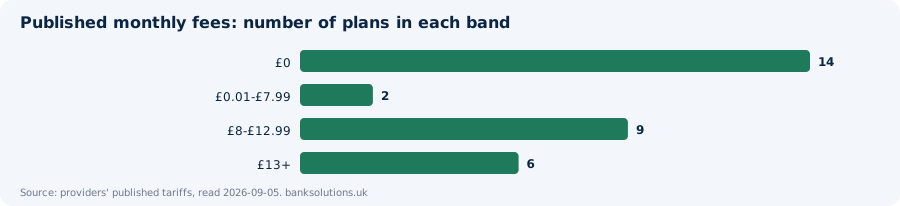
Figure 1. Published monthly fees by band, 31 plans, tariffs read 5 September 2026.
The median across all 31 plans is £7 a month and the mean £10.57; among the plans that charge a fee, the median is £10. The highest published fee, £69.99, belongs to an e-money plan: the 9 e-money plans have a median fee of £12.90 and a maximum of £69.99, against a median of £3.25 and a maximum of £25 for the 22 bank plans.
A £0 monthly fee is a headline, not a cost. Plans that publish no monthly fee appear in the sole-trader table in section 7 with yearly costs of £105 and £50.40, made up entirely of per-payment charges, while several fee-charging plans have no per-payment charge at all. The most visible number on a tariff is not a reliable guide to the total.
4. Per-payment charges
The measure is the published charge for a standard UK electronic payment out - a Faster Payment, Direct Debit or standing order made online or in the app. 29 plans publish one; the other 2 are excluded rather than assumed free.
| Statistic | Value |
|---|---|
| Plans publishing a per-payment fee | 29 |
| Free | 17 |
| Median where charged | 32.5p |
| Highest | 35p |
Where a charge applies the median is 32.5p and the highest 35p; the mean across all 29, free plans included, is 12p. The charged rates sit in a narrow range: the highest, 35p, is published by NatWest (“Automated payments (in or out) £0.35 per item”), Zempler Bank (“35p after” the plan’s allowance) and The Co-operative Bank’s Business Directplus standard tariff; the lowest recorded, 20p, by ANNA Money’s Business plan (“20p per transfer after that”) and Tide, whose footnote is discussed in section 8.
Charges for payments in are published less consistently, which is the main reason plans drop out of the persona tables: Tide’s pop-ups describe the allowance as covering “Send and receive UK bank transfers” without separating the two, so the incoming charge on its Free and Smart plans is not recorded, and ANNA Money’s Free plan charges “0.95% commission” on incoming payments above £1,000 a month, a value-based charge the per-item measure cannot hold.
5. Cash
The measure is the monthly cost of paying in £1,000 over four deposits. 25 plans publish enough to compute it; 6 publish no cash terms. The median is £10 a month, the range £0 to £21, the mean £10.56.
| Provider · plan | Route | Monthly cost |
|---|---|---|
| Santander · Business Current Account - Classic | any | £0 |
| The Co-operative Bank · Business Directplus | any | £0 |
| The Co-operative Bank · Federation of Small Businesses (FSB) account | any | £0 |
| Monzo Business · Lite | Post Office | £4 |
| Monzo Business · Pro | Post Office | £4 |
| Monzo Business · Team | Post Office | £4 |
| Barclays · Business Account | any | £6 |
| Virgin Money · Business Current Account | any | £9.30 |
| Metro Bank · Business Bank Account | branch | £10 |
| Tide · Free | Post Office | £10 |
| Tide · Smart | Post Office | £10 |
| Tide · Pro | Post Office | £10 |
| Tide · Max | Post Office | £10 |
| Mettle (NatWest) · Mettle business account | Post Office | £11 |
| Starling Bank · Business Current Account | Post Office | £12 |
| Virgin Money · M Account for Business | any | £12.80 |
| NatWest · Start-up Business Account | any | £13.30 |
| NatWest · Business Current Account | any | £13.30 |
| The Co-operative Bank · Business Bank Account | any | £15 |
| Zempler Bank · Business Go | Post Office | £16 |
| Zempler Bank · Business Extra | Post Office | £16 |
| Zempler Bank · Business Pro | Post Office | £16 |
| Lloyds · Business Account | any | £19.40 |
| HSBC · Small Business Banking Account | any | £21 |
| HSBC · Business Banking Account | any | £21 |
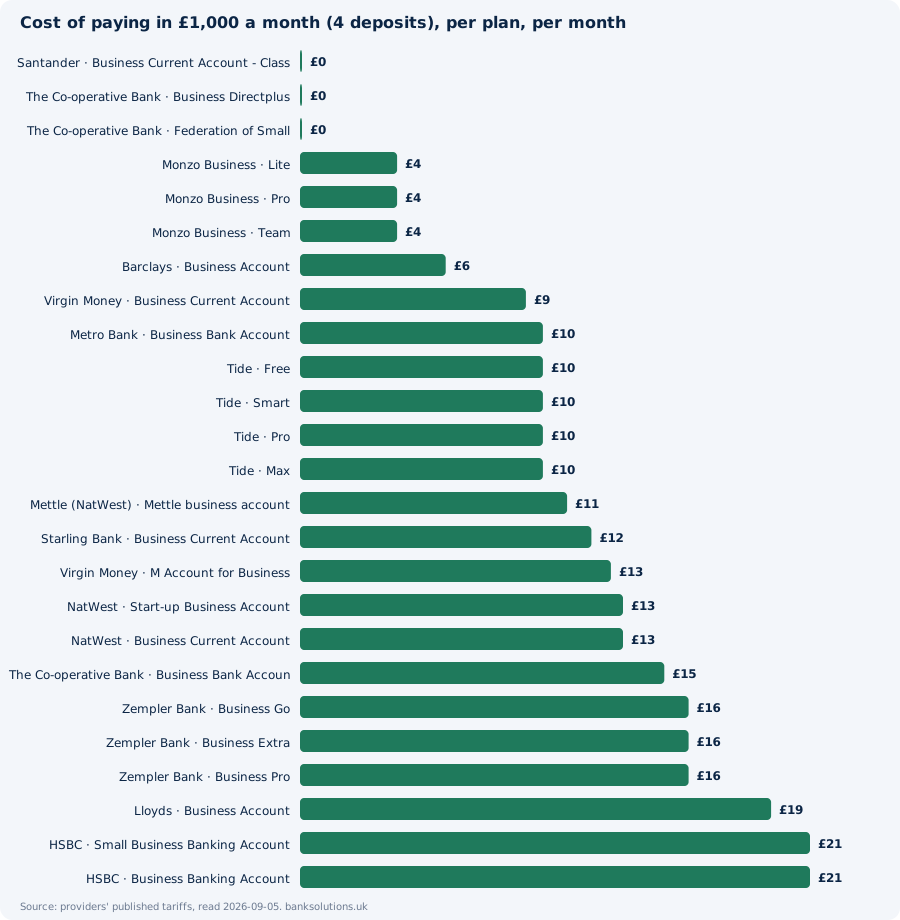
Figure 2. Cost of paying in £1,000 a month in four deposits, per plan, per month. Median £10.
The route column records the channel the cost was computed for: “Post Office” where that is the only published route, “branch” for Metro Bank’s in-store rate, “any” where the published rate is not specific to a channel.
The three plans at £0 each publish an allowance covering the whole £1,000. Santander’s Key Facts Document states: “In each monthly billing period, you can pay in up to £1,000 in cash at Santander cash machines without charge”; The Co-operative Bank’s Directplus and FSB tariffs allow £1,000 per charging period free, then 80p per £100. Santander’s allowance applies at its cash machines only - over Santander or Post Office counters the same document charges £1.25 per £100 from the first pound - so its £0 describes the cash-machine route. The two plans at £21 are HSBC’s, whose Business Price List charges “£1.50 per credit” plus “1.50% of the value deposited” at a branch or Post Office.
The Post Office-route plans are mostly priced per deposit rather than per pound - Monzo “£1 per deposit”, Tide £2.50 per deposit for deposits up to £500, Mettle “£2.75 per deposit” - and Starling’s “0.7% fee (minimum £3 fee)” and Zempler Bank’s “£4 minimum fee or 0.55% fee” both hit their minimums at this usage, giving £12 and £16. On these plans the number of deposits, not the amount, sets the cost. Metro Bank’s in-store rate is 1.00% of the value; its document says “Post Office cash processing charges may vary”, so only the branch route is computed.
6. Free periods
Eleven of the 31 plans publish an introductory free period, of 1, 12, 24, 25 or 30 months; the median is 12 months.
| Provider · plan | Free period | Fee afterwards |
|---|---|---|
| Barclays · Business Account | 12 months | £8.50 |
| HSBC · Business Banking Account | 12 months | £10 |
| Lloyds · Business Account | 12 months | £10 |
| NatWest · Start-up Business Account | 24 months | £0 |
| NatWest · Business Current Account | 24 months | £0 |
| Santander · Business Current Account - Classic | 12 months | £9.99 |
| Metro Bank · Business Bank Account | 12 months | £8 |
| The Co-operative Bank · Business Directplus | 30 months | £7 |
| Virgin Money · Business Current Account | 25 months | £6.50 |
| Monzo Business · Pro | 1 month | £9 |
| ANNA Money · Business | 1 month | £22.90 |
What a period covers varies more than its length; the dataset records each plan’s scope, from the provider’s own wording, in three categories.
Fee only. Five plans waive the monthly fee and nothing else: Barclays (“Per month (first 12 months) Free / Per month (thereafter) £8.50”), Lloyds, Santander, Monzo Pro (“your first month is free”) and ANNA Money Business (“First month free”). Cash, cheque and per-payment charges apply from day one.
Fee and everyday transactions, not cash. Metro Bank’s 12-month new-to-bank offer is “Fee-Free banking on everyday electronic credit and debit transactions and no monthly account maintenance fee”, with cash excluded. The Co-operative Bank’s Directplus introductory tariff - the first 30 months, new-to-bank customers - sets the monthly service charge, automated debits and debit card purchases to “Free”, but cash beyond the standard £1,000 allowance is still charged.
Everything standard. Four plans waive all standard day-to-day charges, cash included. HSBC’s Business Banking Account: “all standard day-to-day current account transactions are free”. NatWest’s two accounts: the standard day-to-day charges do not apply, though international payments, Bankline and unarranged overdrafts sit outside the offer. Virgin Money’s Business Current Account: “25 months’ free day-to-day banking” with “No payment charges on UK bank transfers”, cash within £250,000 a year, international and CHAPS payments excluded.
The NatWest rows show £0 afterwards because NatWest’s standard tariff has no monthly charge; what the 24 months waive is the £0.35 per automated item. Scope is what opens the gap between the Year 1 and Ongoing columns in section 7.
7. What a year costs: the three personas
Sole trader, mostly digital
15 electronic payments out and 10 in a month, no cash, no cheques, no international payments. Computable for 26 plans (5 excluded). Ongoing yearly cost: median £114, lowest £0, highest £840, spread £840, mean £166.99.
| Provider · plan | Year 1 | Ongoing / year |
|---|---|---|
| HSBC · Small Business Banking Account | £0 | £0 |
| The Co-operative Bank · Business Bank Account | £0 | £0 |
| The Co-operative Bank · Federation of Small Businesses (FSB) account | £0 | £0 |
| Virgin Money · M Account for Business | £0 | £0 |
| Starling Bank · Business Current Account | £0 | £0 |
| Monzo Business · Lite | £0 | £0 |
| Allica Bank · Business Rewards Account | £0 | £0 |
| Zempler Bank · Business Go | £50.40 | £50.40 |
| Barclays · Business Account | £0 | £102 |
| NatWest · Start-up Business Account | £0 | £105 |
| NatWest · Business Current Account | £0 | £105 |
| Monzo Business · Pro | £99 | £108 |
| Zempler Bank · Business Extra | £108 | £108 |
| Santander · Business Current Account - Classic | £0 | £120 |
| HSBC · Business Banking Account | £0 | £120 |
| Lloyds · Business Account | £0 | £120 |
| The Co-operative Bank · Business Directplus | £0 | £147 |
| Virgin Money · Business Current Account | £0 | £168 |
| Metro Bank · Business Bank Account | £0 | £186 |
| ANNA Money · Grow | £187 | £187 |
| Zempler Bank · Business Pro | £228 | £228 |
| ANNA Money · Business | £276 | £299 |
| Monzo Business · Team | £300 | £300 |
| Tide · Pro | £330 | £330 |
| ANNA Money · Big Business | £719 | £719 |
| Tide · Max | £840 | £840 |
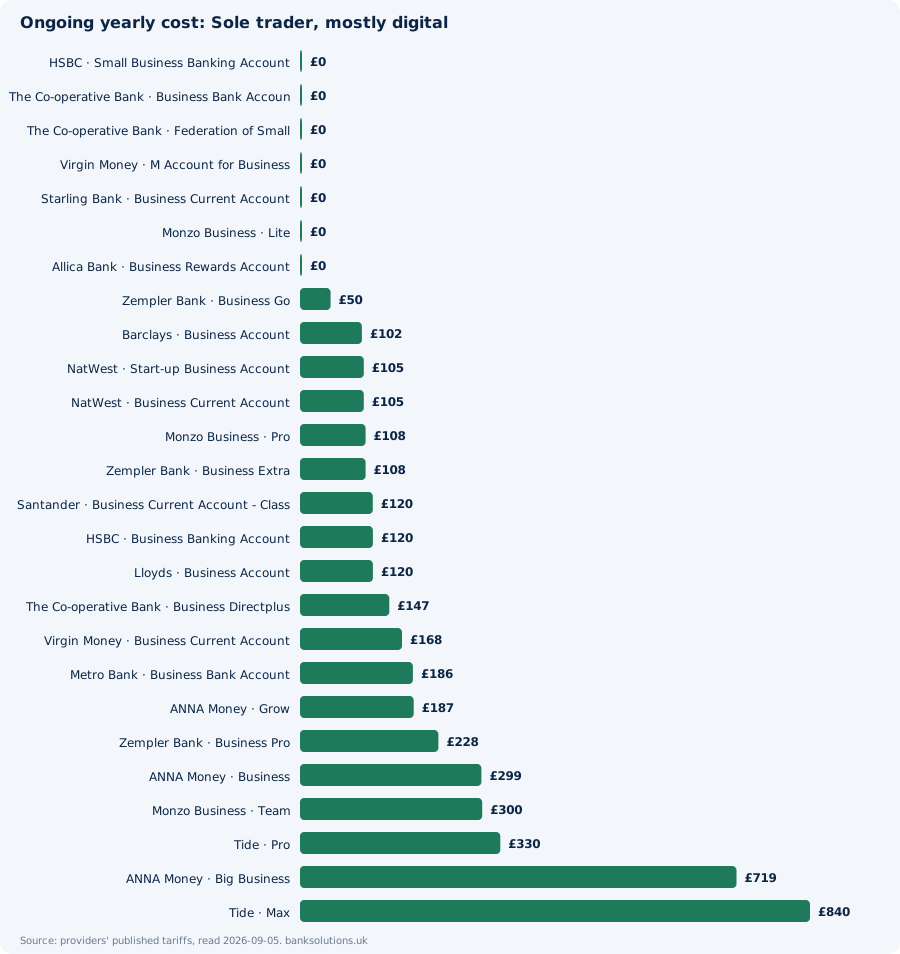
Figure 3. Ongoing yearly cost, sole trader persona. Median £114.
For this persona the monthly fee is the whole story at the top of the table and none of it at the bottom. The plans at £0 have no fee and no charge for the payments modelled; Tide Max’s £839.88 and ANNA Money Big Business’s £718.80 are entirely fee. In the middle, similar totals arrive by different routes: Barclays’ £102 is all fee, NatWest’s £105 all per-item - £63 for payments out and £42 in, on a tariff with no monthly charge - and Zempler Bank Business Go’s £50.40 is the payments beyond its allowance.
In year 1, nine plans that charge in an ongoing year - Barclays, both NatWest accounts, Santander, HSBC Business Banking, Lloyds, Co-operative Bank Directplus, Virgin Money Business Current Account and Metro Bank - cost £0, because their free periods cover at least the fee and this persona incurs nothing else. Monzo Pro’s free month takes it from £108 to £99, ANNA Money Business’s from £299 to £276.
Shop or café taking cash
40 payments out and 30 in, £2,000 of cash paid in over 8 deposits, 4 cheques a month. Computable for 16 plans (15 excluded). Ongoing yearly cost: median £548, lowest £96, highest £1,113, spread £1,017, mean £504.58.
| Provider · plan | Year 1 | Ongoing / year |
|---|---|---|
| The Co-operative Bank · Federation of Small Businesses (FSB) account | £96 | £96 |
| Barclays · Business Account | £173 | £275 |
| Starling Bank · Business Current Account | £288 | £288 |
| Santander · Business Current Account - Classic | £184 | £303 |
| Virgin Money · M Account for Business | £307 | £307 |
| The Co-operative Bank · Business Directplus | £96 | £384 |
| The Co-operative Bank · Business Bank Account | £432 | £432 |
| HSBC · Small Business Banking Account | £528 | £528 |
| Virgin Money · Business Current Account | £0 | £568 |
| Metro Bank · Business Bank Account | £240 | £602 |
| Tide · Pro | £603 | £603 |
| Lloyds · Business Account | £506 | £626 |
| HSBC · Business Banking Account | £0 | £648 |
| NatWest · Start-up Business Account | £0 | £649 |
| NatWest · Business Current Account | £0 | £649 |
| Tide · Max | £1,113 | £1,113 |
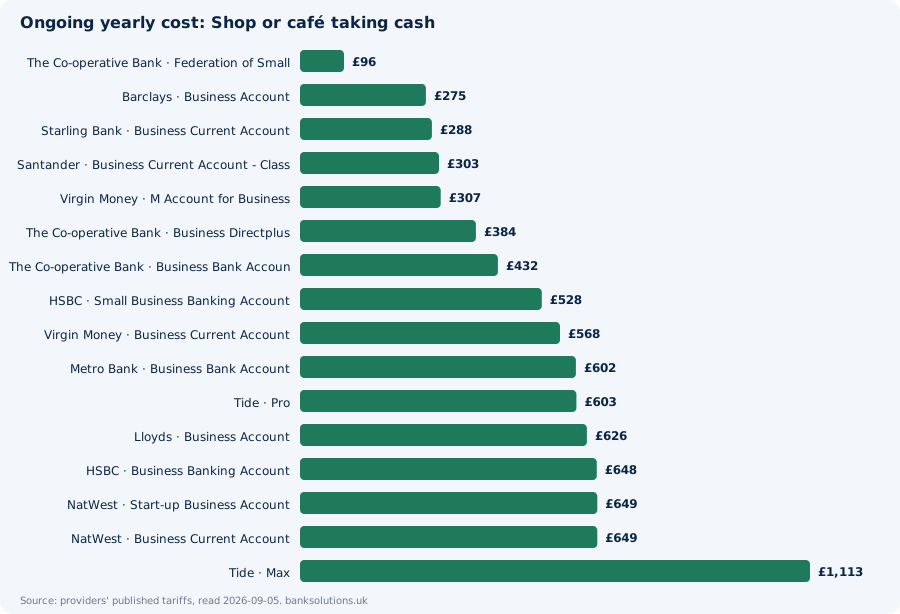
Figure 4. Ongoing yearly cost, shop or café persona. Median £548.
Cash separates these plans. The Co-operative Bank’s FSB account, at £96, has no fee, no per-payment charge and free cheques; its whole cost is cash beyond the £1,000 monthly allowance. Starling’s £288 and Virgin Money M Account’s £307.20 are cash alone. On HSBC’s Small Business Banking Account, which has no fee, cash is £504 of the £528 and cheques £24; the Business Banking Account adds £120 of fee to reach £648. NatWest’s £649.20 has no fee component: £168 for payments out, £126 in, £319.20 of cash, £36 of cheques. Tide Max’s £1,113.48 is £839.88 of fee, £240 of cash and £33.60 of cheques.
In year 1, Virgin Money’s Business Current Account, HSBC’s Business Banking Account and both NatWest accounts fall to £0 because their offers cover cash and cheques as well as the fee. Metro Bank falls from £602.40 to £240, the cash its offer excludes; Co-operative Bank Directplus from £384 to £96, the cash beyond its allowance. Barclays, Santander and Lloyds each lose only the monthly fee.
Small limited company trading abroad
80 payments out and 60 in, £500 of cash in 2 deposits, 2 cheques, 2 international payments of £2,000 a month. Computable for 13 plans (18 excluded). Ongoing yearly cost: median £666, lowest £240, highest £1,267, spread £1,027, mean £729.71.
| Provider · plan | Year 1 | Ongoing / year |
|---|---|---|
| The Co-operative Bank · Federation of Small Businesses (FSB) account | £240 | £240 |
| The Co-operative Bank · Business Bank Account | £366 | £366 |
| Virgin Money · M Account for Business | £497 | £497 |
| Barclays · Business Account | £410 | £512 |
| HSBC · Small Business Banking Account | £546 | £546 |
| Lloyds · Business Account | £497 | £617 |
| HSBC · Business Banking Account | £408 | £666 |
| The Co-operative Bank · Business Directplus | £240 | £678 |
| Santander · Business Current Account - Classic | £617 | £737 |
| Tide · Pro | £887 | £887 |
| Tide · Max | £1,229 | £1,229 |
| Virgin Money · Business Current Account | £600 | £1,245 |
| Metro Bank · Business Bank Account | £660 | £1,267 |
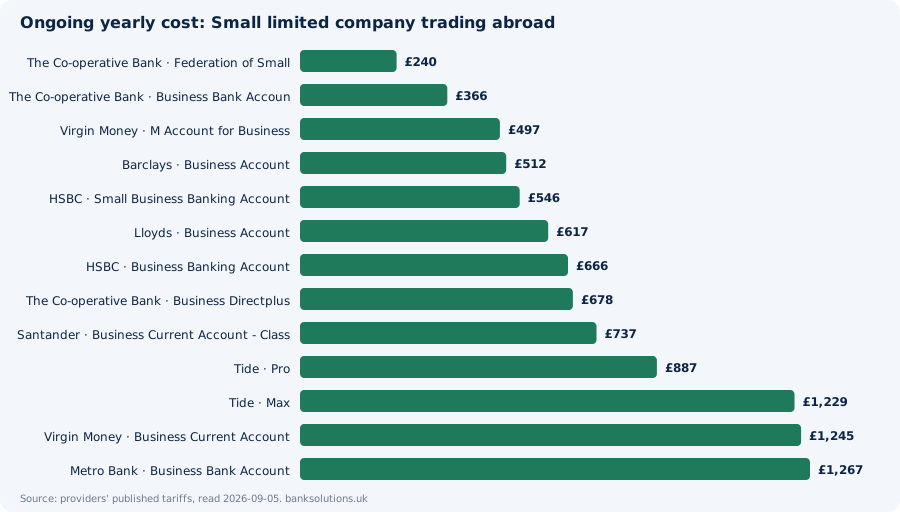
Figure 5. Ongoing yearly cost, small limited company trading abroad. Median £666.
International payments do most of the work here. The Co-operative Bank’s FSB account at £240 is nothing but international payments - its tariff’s £10 SWIFT charge via online banking, on two payments a month - and its Business Bank Account adds £90 of cash and £36 of cheques to the same £240. Barclays and Lloyds each carry £360 of international charges, HSBC £408, Virgin Money’s M Account £420, and Santander, Virgin Money’s Business Current Account and Metro Bank £600 each. The two most expensive differ: Tide Max’s £1,228.68 is dominated by its £839.88 fee, with £312 abroad; Metro Bank’s £1,267.20 is spread across a £96 fee, £288 for payments out, £216 in, £60 of cash, £7.20 of cheques and £600 of international payments.
No plan reaches £0 in year 1, because no published free period covers international payments. The plans whose offers cover everything else fall to their international charge alone - HSBC Business Banking to £408, Virgin Money’s Business Current Account to £600 - or, for Metro Bank, whose offer excludes cash, to £660: £600 abroad plus £60 of cash.
8. Caveats from the tariffs themselves
The dataset records each plan at its published standard tariff. These are the conditions, recorded in the plan notes, that affect the numbers above.
Allica Bank. “Monthly fees: None*”, footnoted: “Customers whose balance falls below an average of £10,000 in the previous month will incur a £25 monthly fee. This does not apply to customers who hold an active loan product (including an overdraft) with Allica Bank.” The index records the headline £0; Allica’s £0 in the sole-trader table therefore assumes that condition is met.
Metro Bank. The standard tariff is £8 a month and £0.30 per UK transaction. “If your Business Bank Account balance stays at £6,000 or above for any whole month we’ll waive the monthly maintenance fee and give you 30 free transactions for that month.” Because both depend on the balance, the index applies the standard tariff and records neither.
Tide. The transfer footnote reads literally “*We charge 0.20p for each bank transfer.” - 0.20 pence. The dataset records it as 20p (£0.20), consistent with the cheque line on the same page, “plus a 20p standard transaction fee”, and flags the reading for confirmation with Tide. On Pro and Max, bank transfers are “Unlimited”, so no per-transfer charge arises.
NatWest. The 24-month free period on the Business Current Account is for switchers only - an established business with turnover up to £2 million switching through the full Current Account Switch Service, the two years running from the date the switch completes; a business that opens the account without switching pays standard charges from day one. The Start-up Business Account’s 24 months apply to a business started within the last 12 months with turnover not exceeding £1 million. For accounts opened on or after 20 April 2026, free banking ends if cash deposits exceed £200,000 in any 12-month period. The £0 Year 1 figures assume these conditions are met.
The Co-operative Bank Business Directplus. The tariff prints three columns: an introductory tariff for the first 30 months for new-to-bank customers, a standard tariff for a balance above £1,000 (£7 a month, 35p per automated debit), and a third “if the credit balance falls below £1,000 at any time in the charging period” (£7 a month, 70p per automated debit). The dataset records the standard tariff; the 70p rate is not modelled.
Mettle. The Fee Information Document lists cash deposits (£2.75 per Post Office deposit), card cash withdrawals, replacement cards and inbound international payments, but states no fee - or explicit £0 - for UK electronic payments in or out, so the plan is not computable for any persona. It appears in the cash table because its cash charge is published.
Wise Business. The pricing page shows “Sending money: Fee varies by currency, From 0.24%” with no separate GBP-to-GBP transfer fee, so the plan is not computable. It publishes no monthly fee, a one-off 50 GBP set-up fee, and no cash or cheque services.
9. Method, limits and how to cite
The dataset. Every figure comes from the Bank Solutions dataset generated on 5 September 2026, in which each plan is recorded from the provider’s own published document with the wording quoted and the URL named. The live comparison at /compare/ and the cost calculator at /calculator/ run on the same dataset.
Rounding. The persona tables show yearly costs to the nearest pound; the underlying values carry pence and are in the index file - the sole-trader median is £113.94, the shop median £547.80 and the small-company median £666.00.
What changes after publication. Tariffs change with notice. Bank Solutions re-checks each tariff and records every subsequent change - provider, field, old and new value, date - in the public change log at /tariff-changes/. The next edition will re-run the same measures and report movement against this baseline.
What the index does not measure. Overdraft interest and fees, credit interest, foreign exchange margins, card fees abroad, CHAPS, and charges outside the modelled usage. The persona costs assume each plan’s conditions - eligibility, minimum balances, the terms of a free period - are met.
Information, not advice. This report describes what providers publish. It recommends no account to any business, and the tables are ordered by the computed figures, not by merit. A business choosing an account should read the provider’s current tariff and, where the decision has tax or financing consequences, take professional advice.
How to cite. The UK Business Banking Fee Index - September 2026, Bank Solutions (Domain Farm Ltd), data as of 5 September 2026, with the page URL; a full citation appears at the foot of this page. Corrections are made in place with a dated note.
Sources
- Barclays - Business Account fees and charges (tariff PDF, version UK_0324) · accessed 2026-09-05
- HSBC UK - Business Price List (PDF, 15 December 2025) · accessed 2026-09-05
- Lloyds Bank - Account Charges and Processing Times (PDF, applies from July 2026) · accessed 2026-09-05
- NatWest - Business Account Charges (PDF, correct as at 20 April 2026) · accessed 2026-09-05
- Santander - Business Current Account Classic Key Facts Document (PDF, effective 28 April 2026) · accessed 2026-09-05
- Metro Bank - Business Bank Account Important Information Summary (PDF, correct as of 22 July 2026) · accessed 2026-09-05
- The Co-operative Bank - Business Bank Account tariff (PDF, effective 31 March 2025) · accessed 2026-09-05
- The Co-operative Bank - Business Directplus tariff (PDF, effective 31 March 2025) · accessed 2026-09-05
- The Co-operative Bank - Federation of Small Businesses account tariff (PDF, effective 31 March 2025) · accessed 2026-09-05
- Virgin Money - M Account for Business Tariff Guide (PDF, correct as at 19 December 2025) · accessed 2026-09-05
- Virgin Money - Business Banking Tariff Guide (PDF, correct as at 8 July 2025) · accessed 2026-09-05
- Starling Bank - Business current account (product page) · accessed 2026-09-05
- Monzo - Business account Fee Information (v1.16, 18 August 2026) · accessed 2026-09-05
- Tide - Pricing · accessed 2026-09-05
- Zempler Bank - Business current account pricing · accessed 2026-09-05
- Mettle - Fee Information Document · accessed 2026-09-05
- Allica Bank - Business Rewards Account fees, payment limits, exclusions and cashback eligibility · accessed 2026-09-05
- ANNA Money - Pricing · accessed 2026-09-05
- Wise - Business pricing (UK) · accessed 2026-09-05
- Bank Solutions comparison dataset · accessed 2026-09-05
- Bank Solutions cost calculator · accessed 2026-09-05
Cite this report
Sam Allcock (2026). The UK Business Banking Fee Index - September 2026. Bank Solutions, Domain Farm Ltd. https://www.banksolutions.uk/reports/uk-business-banking-fee-index-2026-09/
Figures are as published by each provider on the dates stated. The dataset and every subsequent change are public at www.banksolutions.uk/tariff-changes/. Information, not advice.